
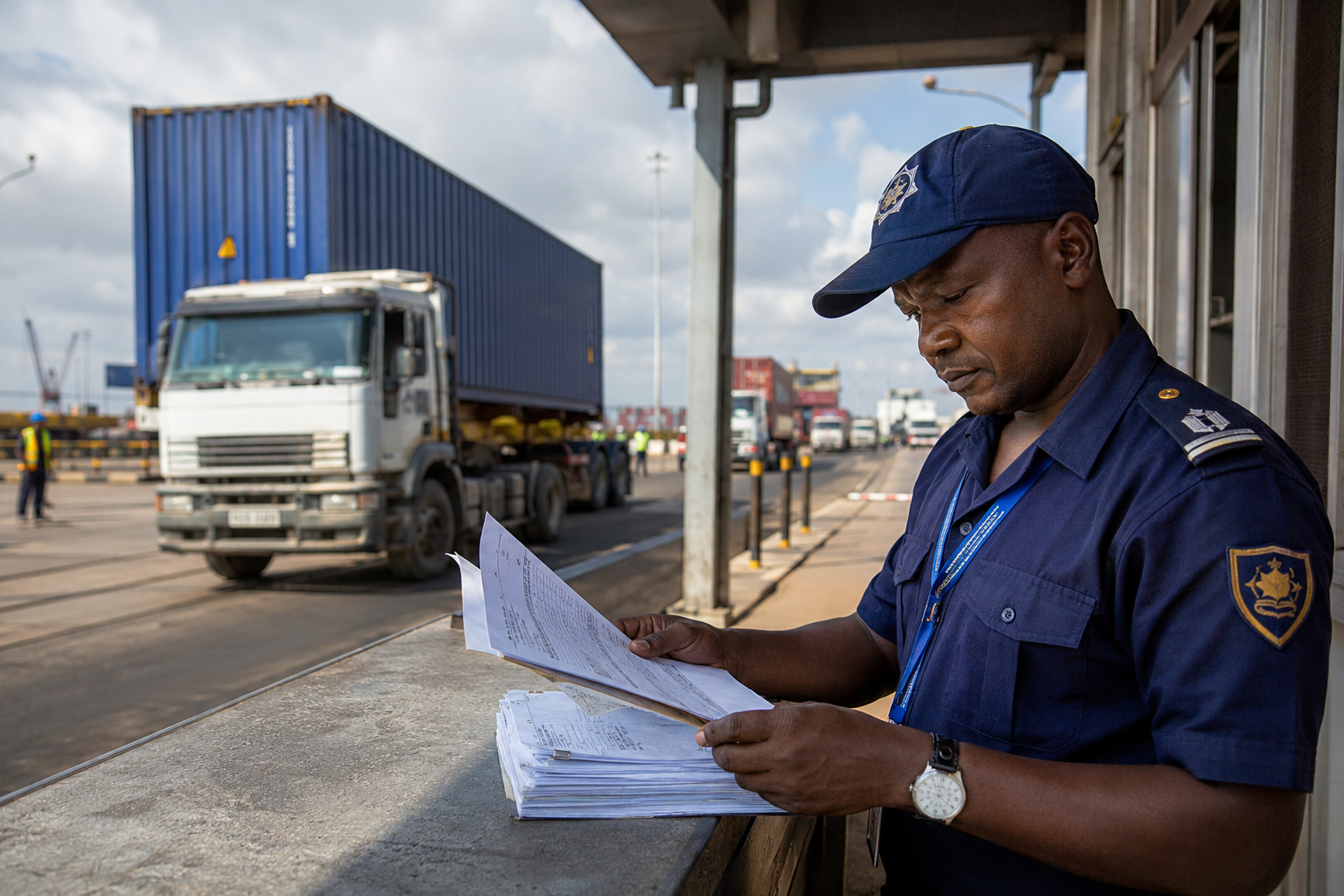
Tanzania's customs systems are well-structured and increasingly digital. For routine containerised freight, they work smoothly. But project cargo is not routine — and the requirements that catch out inexperienced agents almost always sit in the gap between how standard cargo is cleared and how a 90-tonne, over-dimensional, transit-bound consignment is actually treated.
This guide sets out how clearance at Dar es Salaam really works for project cargo — the systems involved, why project cargo is different, and how cross-border clearance functions across the corridor countries.
The two systems you need to understand
Two platforms sit at the centre of Tanzanian clearance:
TANCIS — the Tanzania Customs Integrated System. This is the Tanzania Revenue Authority's customs processing platform. Declarations are lodged, assessed and processed through TANCIS. It is where the customs entry lives, where duties and taxes are computed, and where the release is ultimately granted.
TANESW — the Tanzania National Electronic Single Window. This connects the many agencies involved in cross-border trade so that permits, approvals and clearances can be coordinated through a single electronic channel, rather than chased agency by agency. For project cargo — which frequently triggers additional agency involvement — the single window is what keeps the process coordinated.
Why project cargo is treated differently
A standard container has a clean HS code, a known value and a predictable clearance path. Project cargo breaks several of those assumptions at once:
- Classification is harder. A single "shipment" may be one indivisible machine, or a plant broken into dozens of parts across multiple packages — each of which may classify differently and must be documented accordingly.
- Valuation needs care. High-value capital equipment attracts scrutiny. Supporting documentation — contracts, proforma and commercial invoices, packing lists — must be complete and consistent, or the entry stalls.
- Exemptions and project status. Cargo tied to mining, energy or government-backed projects may qualify for specific duty treatment or exemptions. Claiming that correctly requires the right paperwork lodged the right way — and getting it wrong is costly in both duty and time.
- Physical inspection is more involved. Verifying an over-dimensional or heavy unit is not the same as opening a container. Inspection has to be coordinated with the realities of where and how the cargo can be positioned.
Transit vs. home consumption — the critical fork
The single most important distinction for corridor cargo is whether it is entering Tanzania for use (home consumption) or merely passing through to a landlocked neighbour (transit). Most of Veenlam's project cargo is transit cargo — bound for Zambia, the DRC, Rwanda, Malawi, Burundi or Uganda.
Transit cargo is cleared under bond and moves under customs control from the port to the border. That changes the documentation, the guarantees required, and the monitoring the cargo is subject to along the corridor. Handling a transit consignment as if it were a domestic import — or vice versa — is one of the most common and most expensive mistakes an inexperienced agent can make.
Cross-border clearance across the corridors
Clearing the port is only the first customs event. Every corridor ends at a border, and often at a second one. The regional framework — including instruments designed to reduce duplication at borders — helps, but each transit country still has its own customs authority, its own requirements and its own processing at the crossing.
For a DRC movement via Kasumbalesa, that means Tanzanian export/transit formalities, Zambian transit handling, and Congolese import clearance — three customs environments on one journey. Coordinating documentation so the consignment is not held at each successive border is a core part of what corridor clearance actually involves.
How to keep a project clearance moving
- Get documentation complete and consistent before arrival — invoices, packing lists, contracts and permits aligned to the actual cargo
- Establish transit vs. home-consumption status early; it dictates the entire clearance path
- Identify any exemption or project-duty treatment in advance and lodge it correctly
- Coordinate all involved agencies through the single window rather than sequentially
- Plan destination-country clearance at the same time as port clearance, not after the cargo is already rolling
Done properly, customs is not the bottleneck on a project movement — it is a coordinated part of a single plan that runs from the quay to the delivery site. Veenlam handles clearance through TANCIS and TANESW and manages cross-border formalities across all six corridors, so the documentation keeps pace with the cargo.